What Is Mukhwas? Meaning, Types, Benefits & How to Enjoy It
Mukhwas is India's colourful after-meal mouth freshener. Here's what it's made of, the four main types, why families serve it after every meal, and how to choose and store the right one.
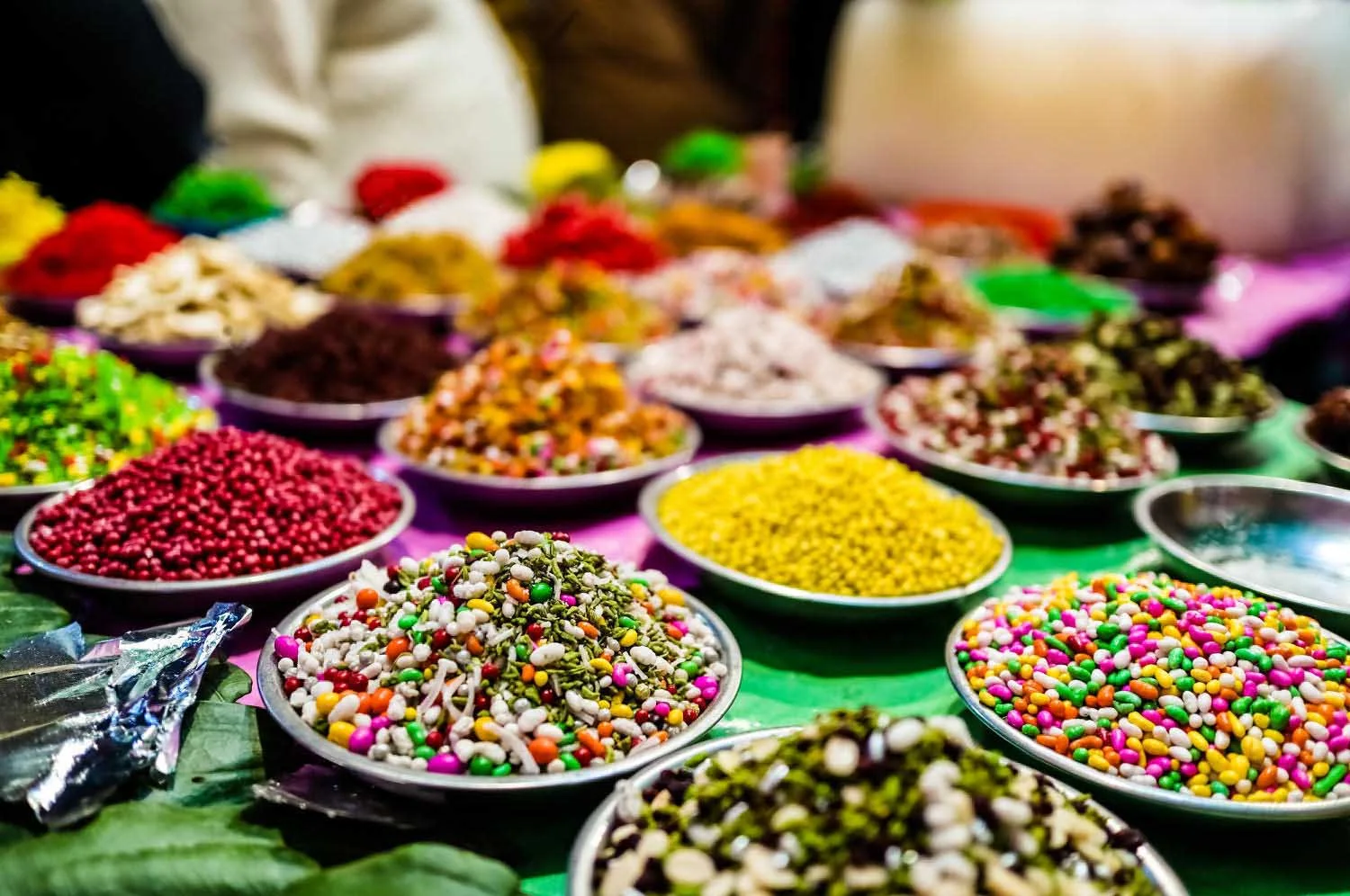
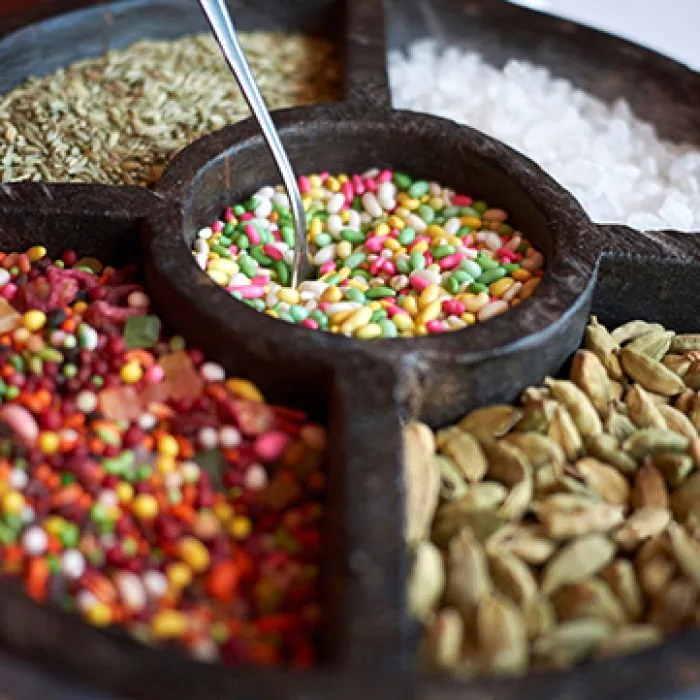
Walk out of almost any Indian restaurant and you'll pass a little bowl by the counter, full of colourful seeds with a tiny spoon tucked in. You take a pinch, chew, and leave with a fresh, sweet, slightly spicy taste in your mouth. That pinch is mukhwas, and for many Indian families no meal feels finished without it.
This guide covers what mukhwas actually is, what goes into it, the main types, why it's served after meals, and how to choose and store the right one for your home.
What does mukhwas mean?
The word comes from two Hindi and Gujarati words: mukh, meaning mouth, and vas (or vaas), meaning fragrance. So mukhwas is, quite literally, “mouth fragrance”. In English it's usually called an after-meal mouth freshener, and at home many people simply call it saunf, after its most important ingredient.
Unlike a mint or a chewing gum, mukhwas is made from real seeds and spices: roasted, sweetened or flavoured, then mixed in small batches. It's meant to be chewed slowly in small amounts, a spoonful at a time.
What is mukhwas made of?
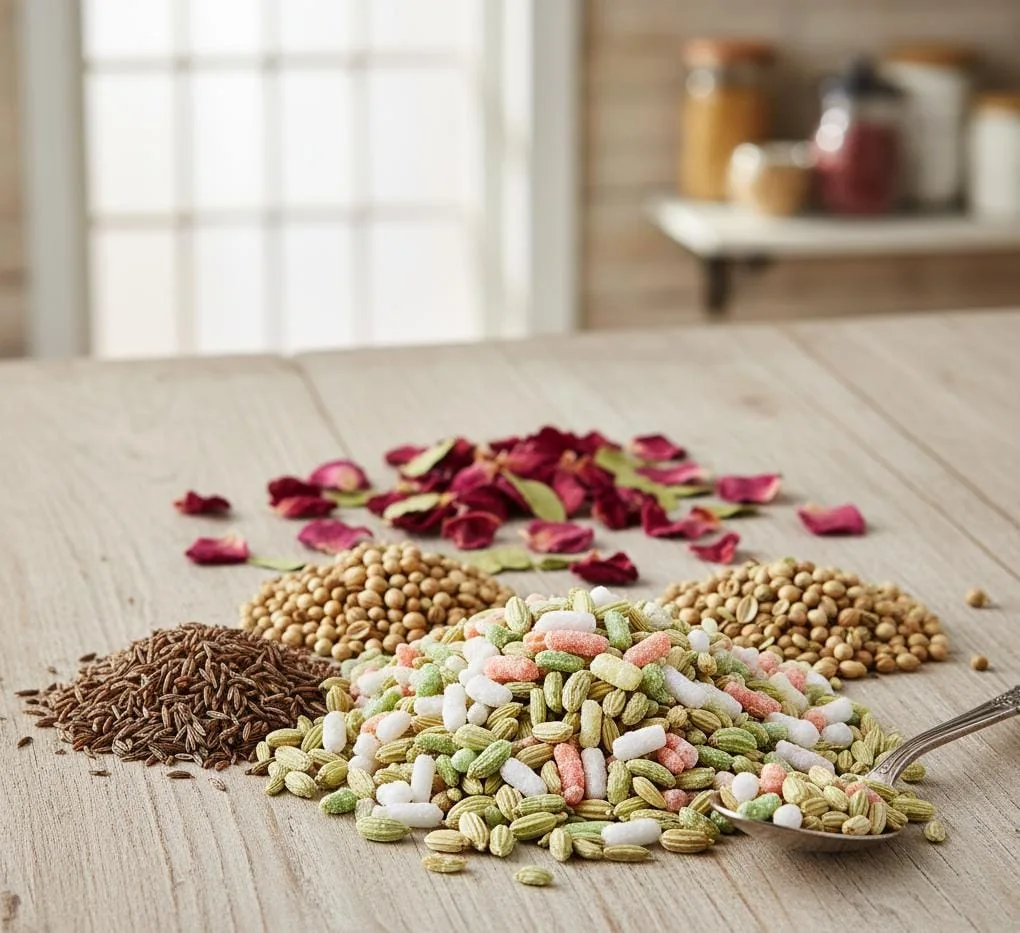
Every family and every brand has its own recipe, but most mukhwas is built from the same handful of ingredients:
- Fennel seeds (saunf): the heart of almost every mix, plain, roasted or sugar-coated in bright colours.
- Sesame seeds (til): nutty and crunchy, often roasted with a little salt.
- Coriander splits (dhana dal): roasted coriander seed halves with a mild, toasty flavour.
- Dill, carom (ajwain) and flax (alsi) seeds: the savoury, slightly sharp notes in digestive blends.
- Rose petals, dried dates and betel leaves: for the fragrant, royal taste of paan-style mixes.
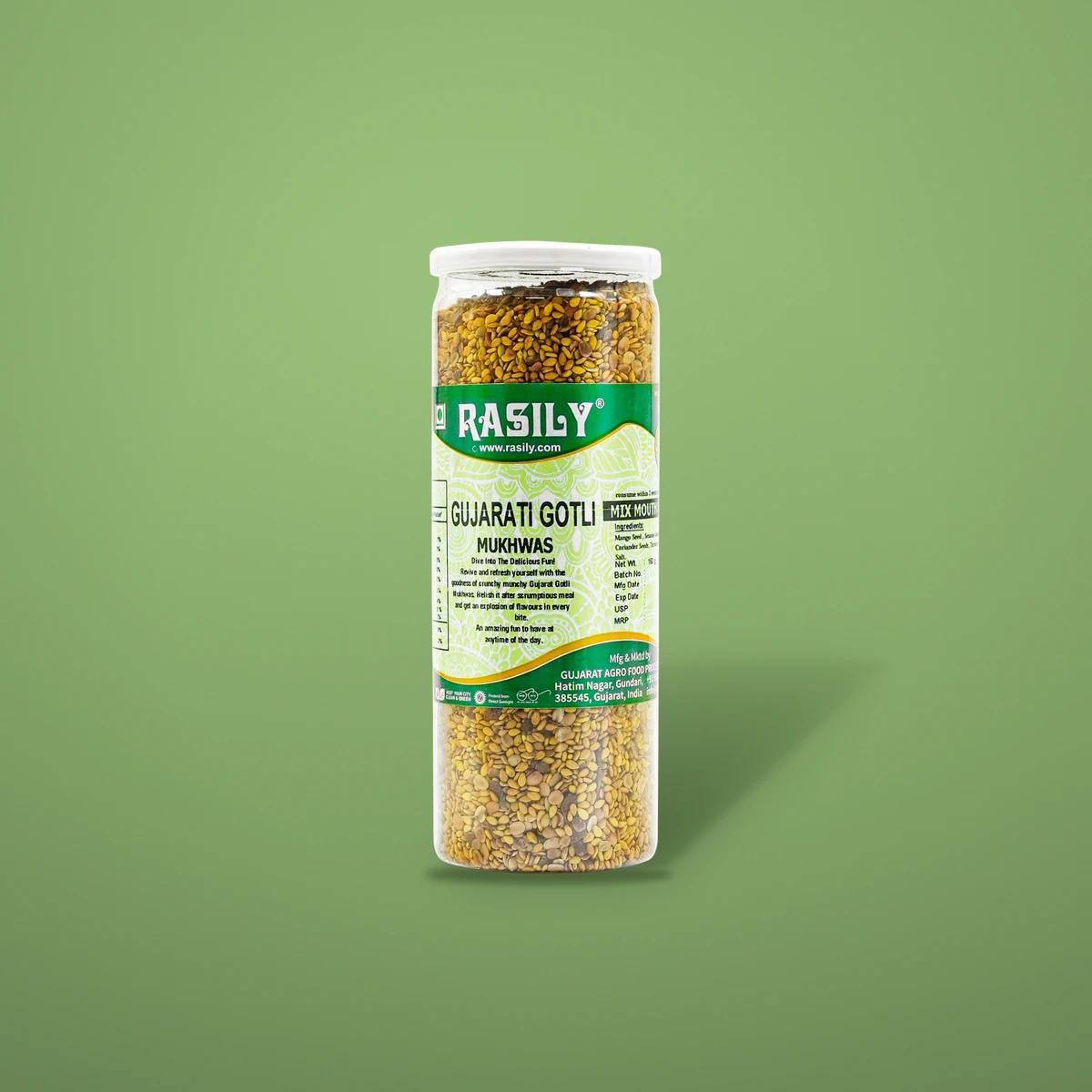
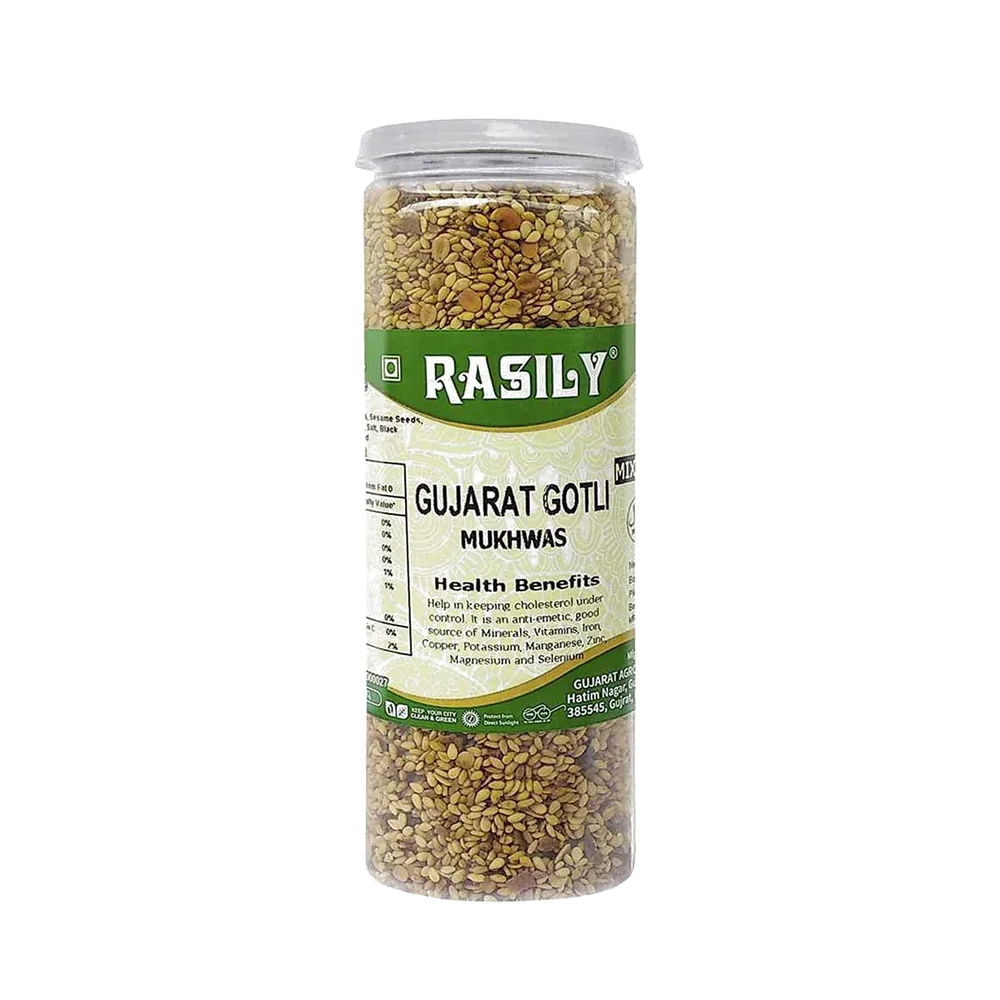
- Mango seed (gotli): a Gujarati speciality, sliced, roasted and salted.
- Salt and turmeric: used to roast the savoury seeds the traditional way.
At Rasily we make our mukhwas from these natural ingredients and flavours, with no preservatives, the way we have since 1973.
The main types of mukhwas
Walk into a mukhwas shop in Gujarat and you'll see dozens of jars, but almost all of them fall into four families.
1. Sweet mukhwas
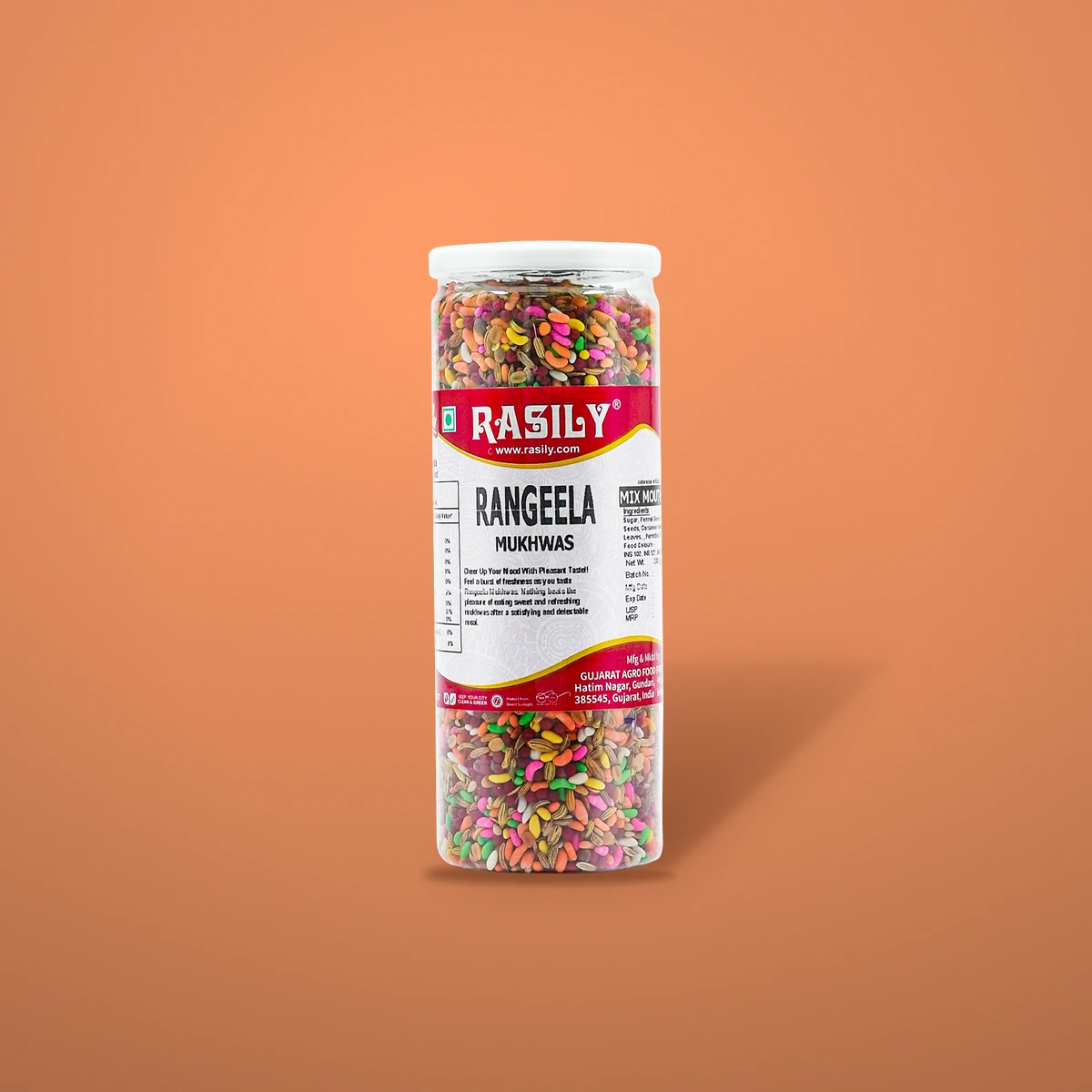
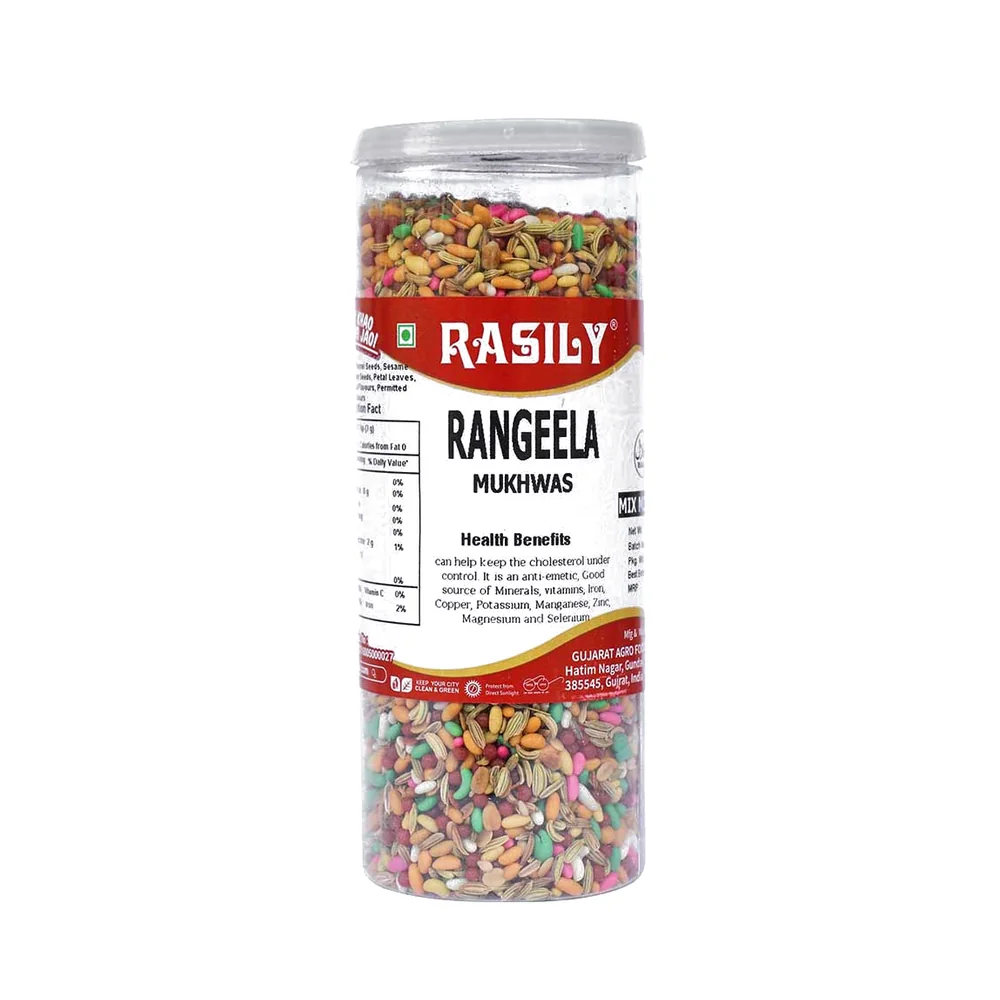
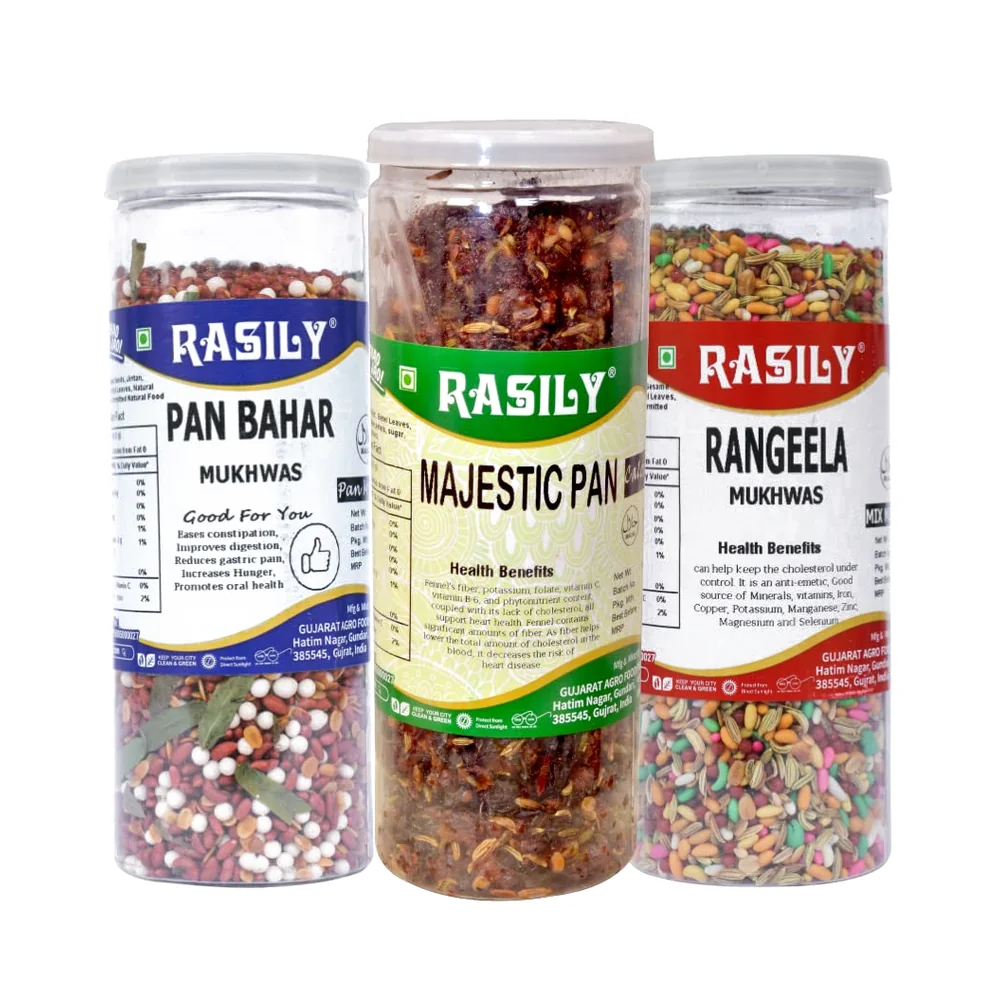
The colourful one that children love. Fennel and other seeds are coated in sugar in bright reds, greens, yellows and whites. Some are scented with rose, others mixed with sesame and coriander for crunch. Try Rangeela for a classic rainbow mix, Gulab for rose, or Tini Mini for tiny coloured saunf.
2. Paan mukhwas
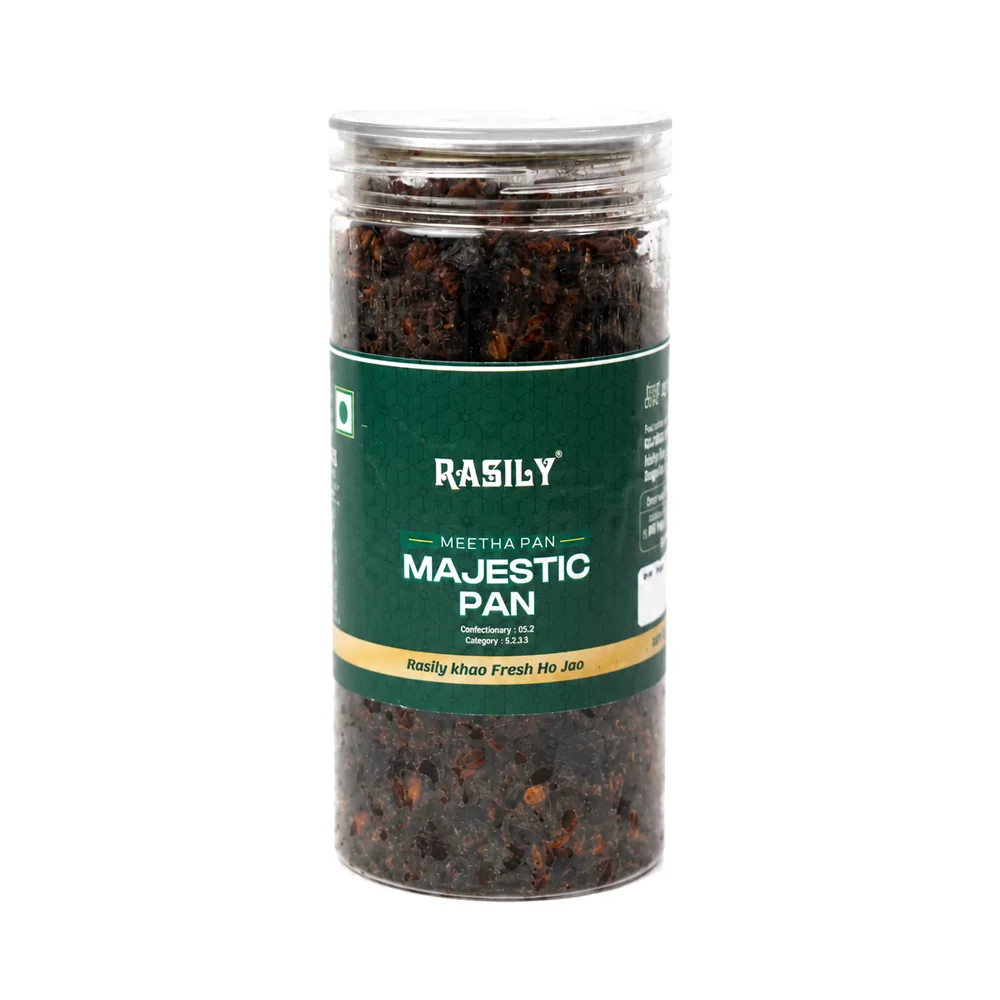
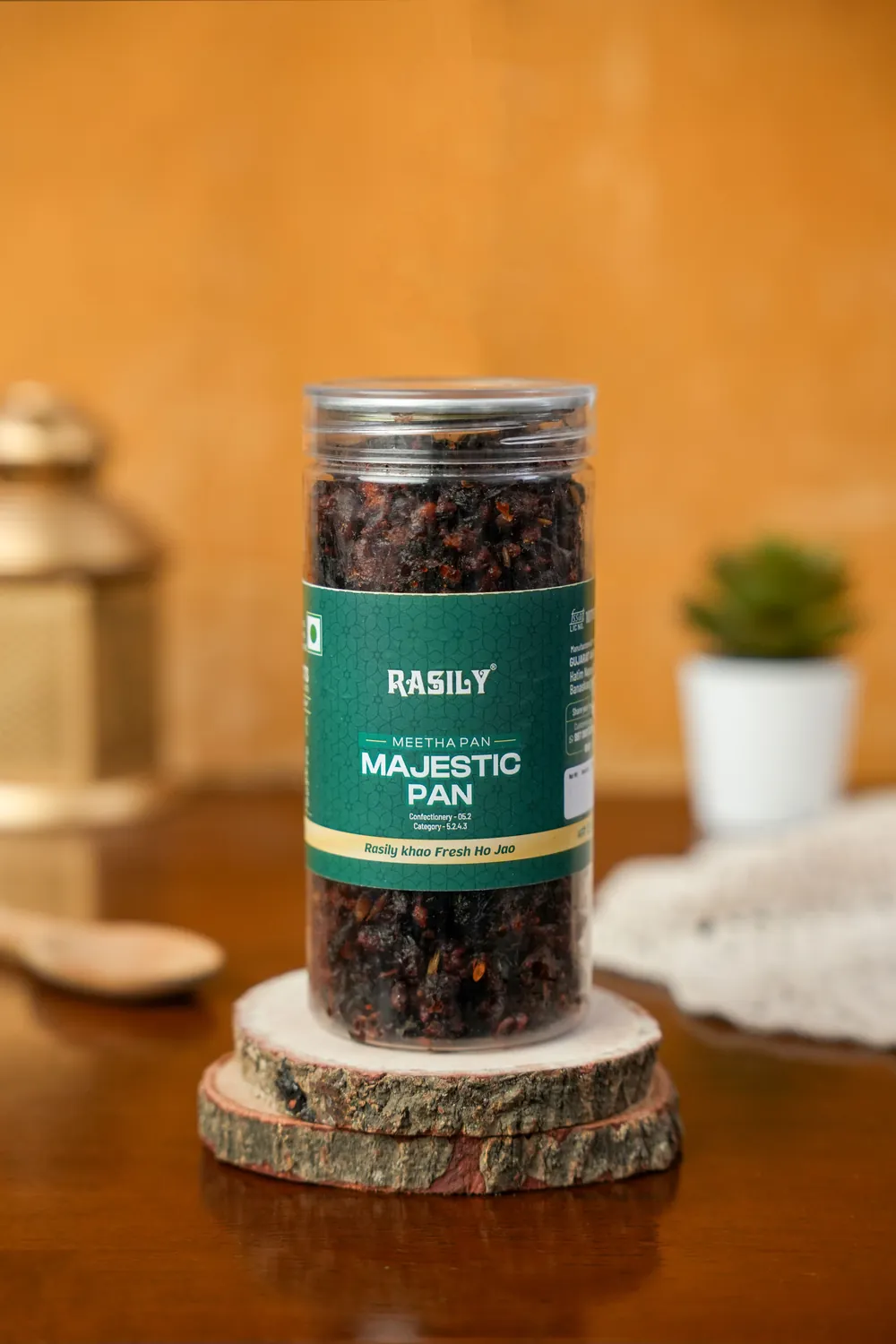
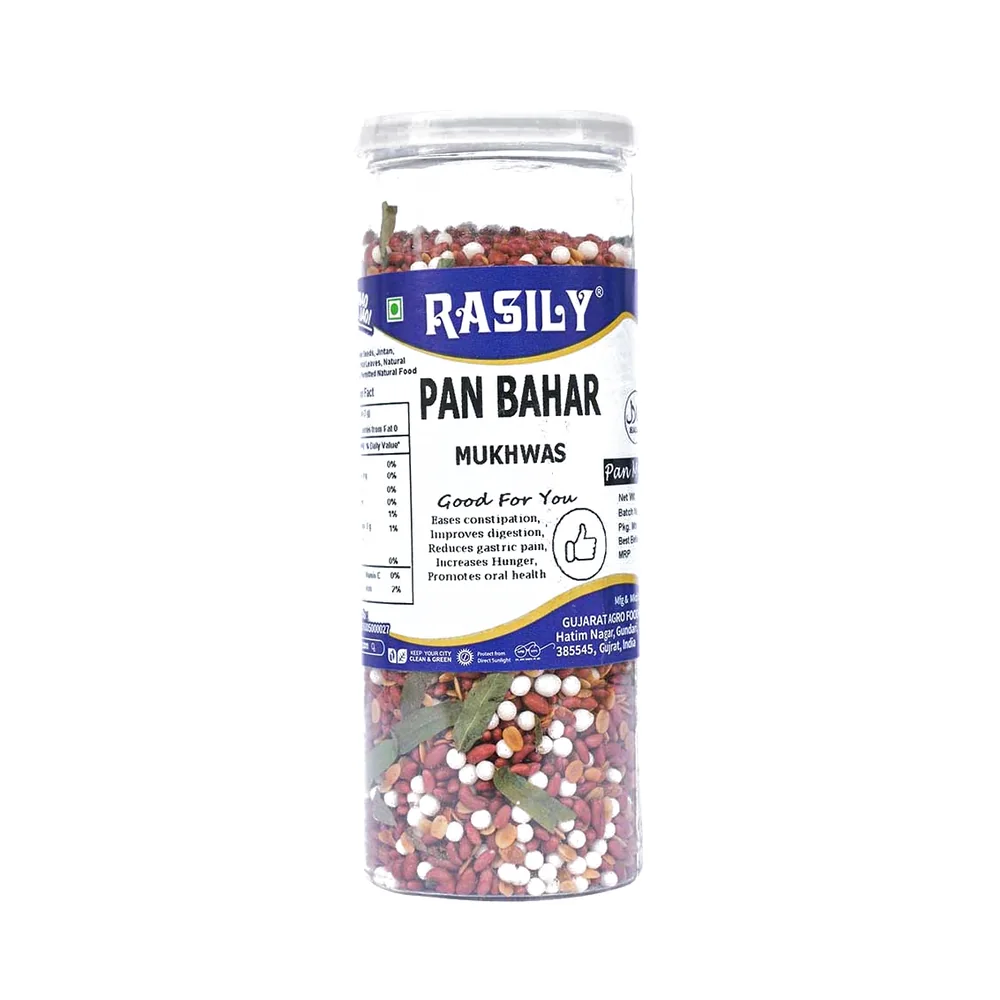
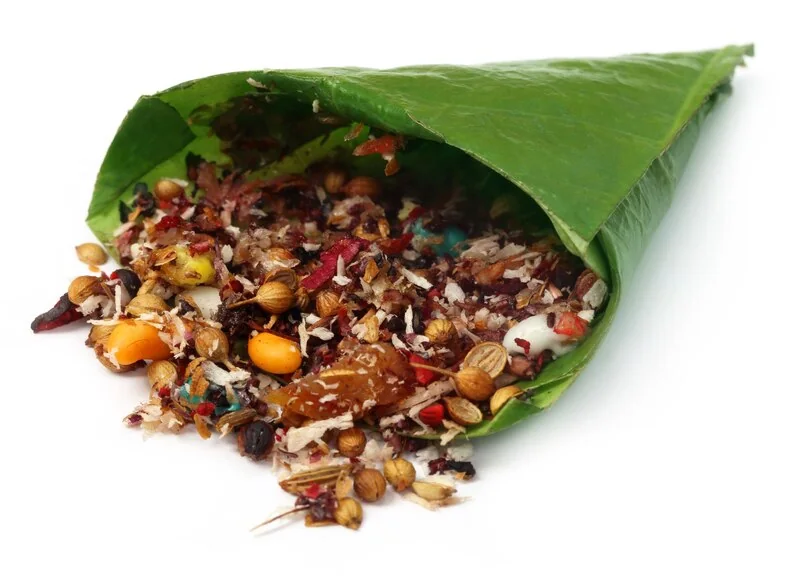
For anyone who loves the taste of a meetha paan after dinner. Paan mukhwas brings that same sweet, aromatic flavour to a spoonful of seeds, with fennel, dried dates, rose petals and coriander. Our Majestic Pan is made with real betel leaves, while Pan Bahar and Mitha Pan are long-time family favourites.
3. Digestive (roasted) mukhwas
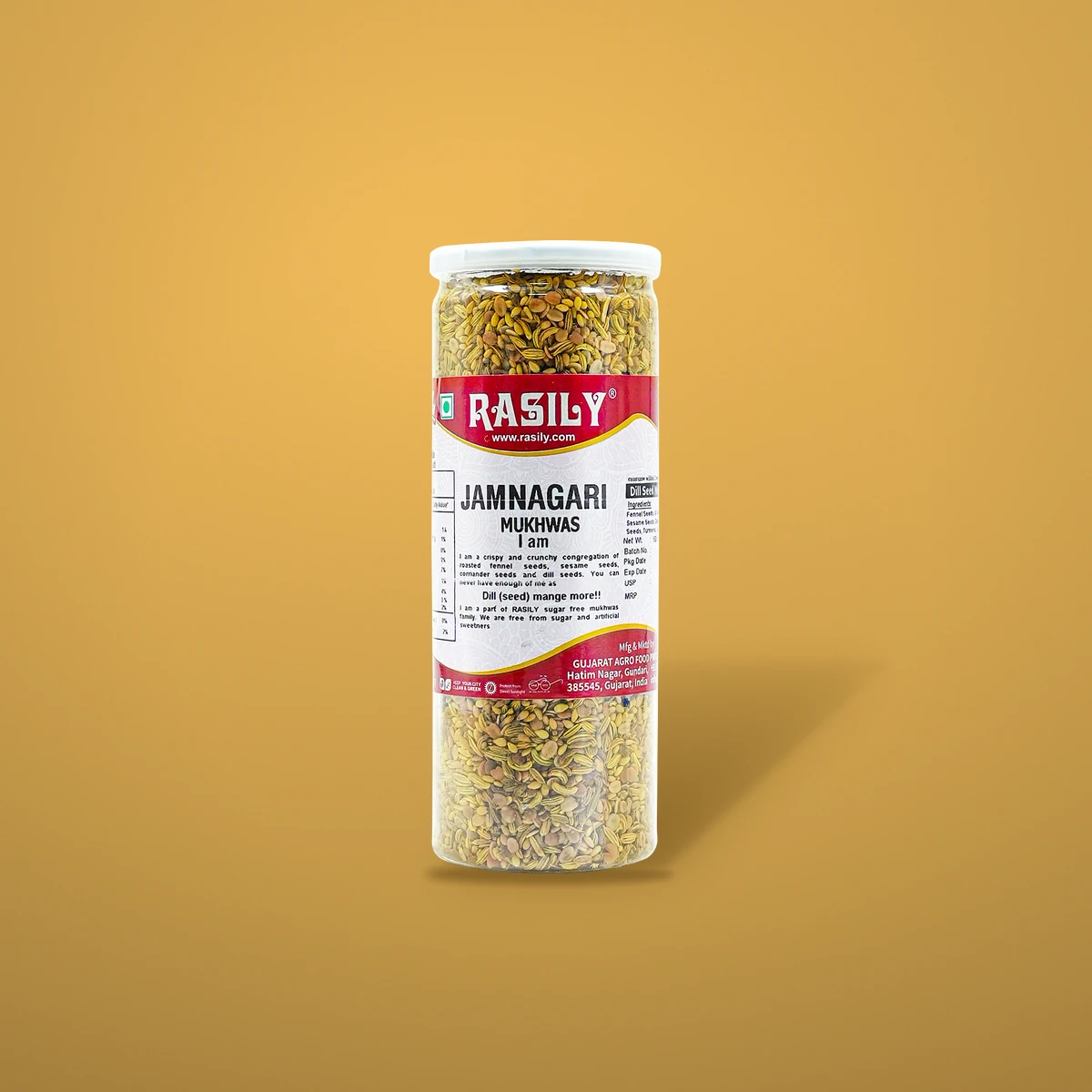
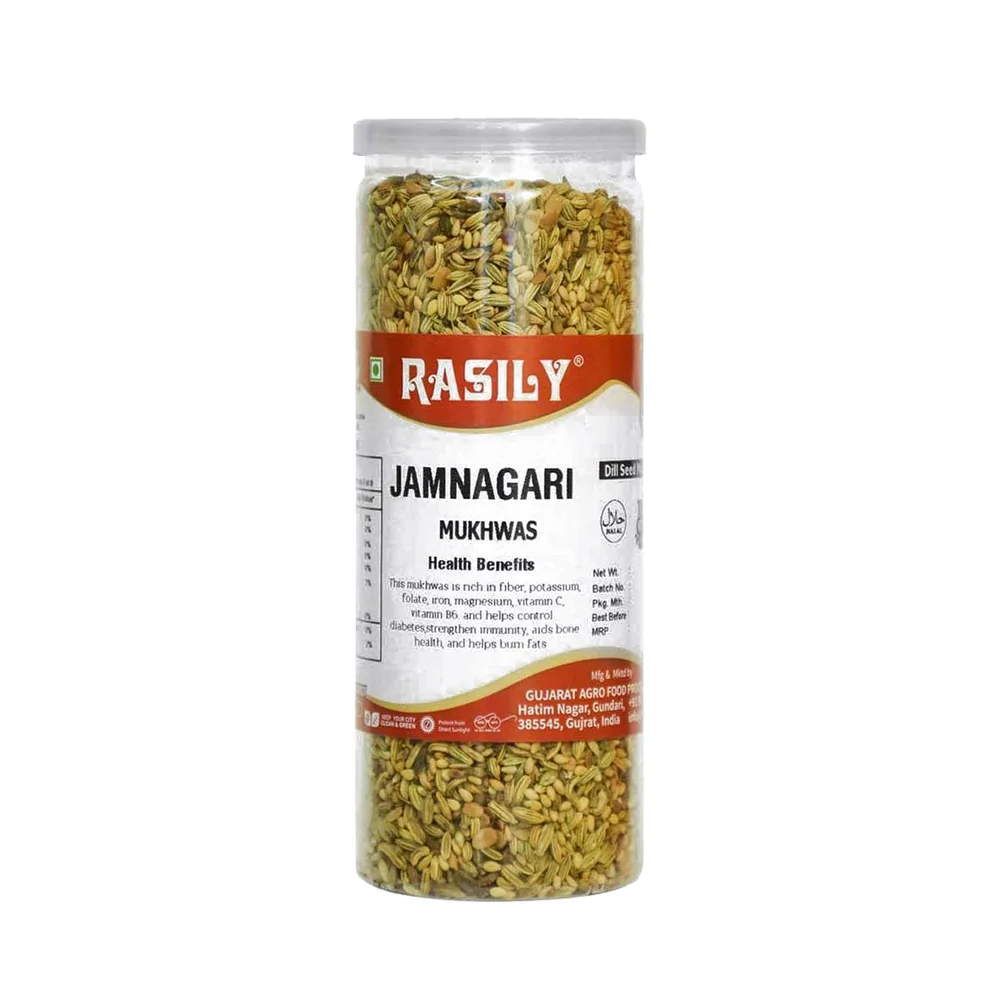
The savoury, old-school kind, served in Gujarati homes for generations. Seeds such as fennel, sesame, dill and carom are roasted with salt and turmeric for a toasty, tangy taste with very little or no sugar. Jamnagari, Salted, Flax Seed and Gujarati Gotli (with real mango seed) all belong here.
4. Jintan and minty mouth fresheners
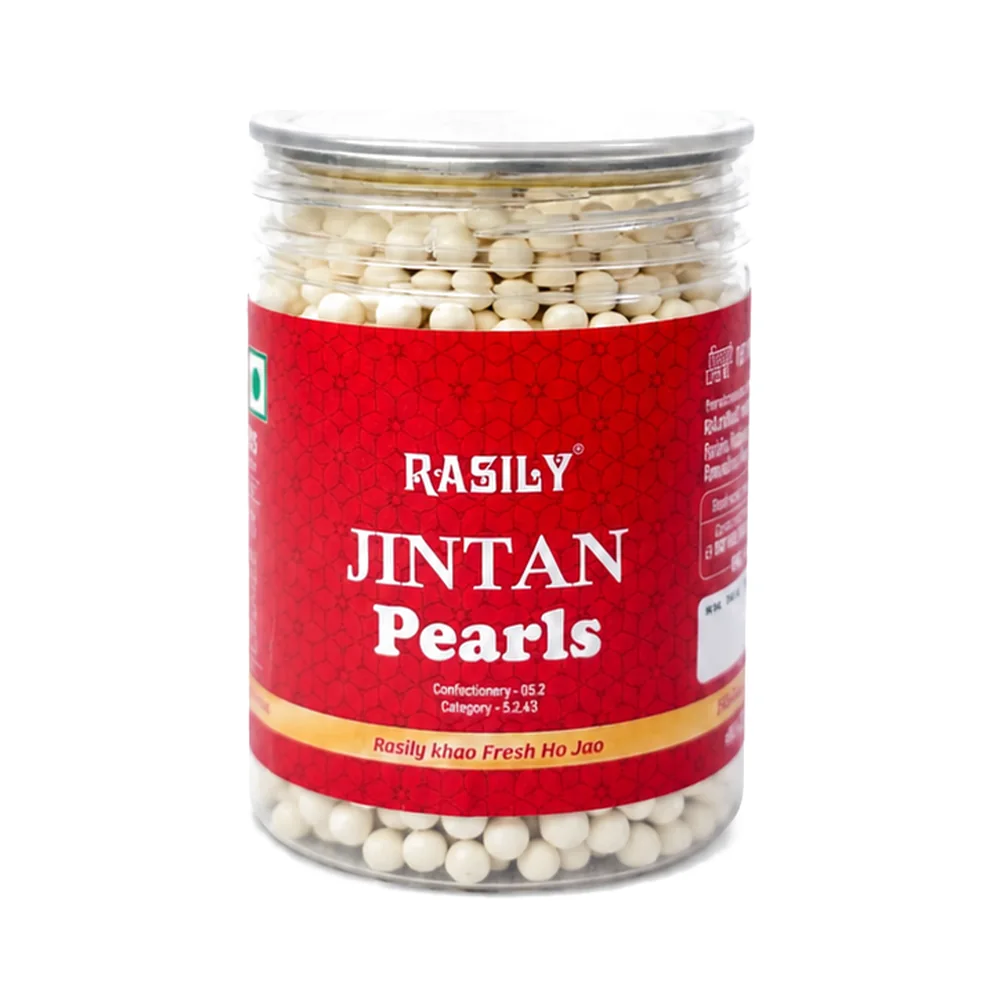
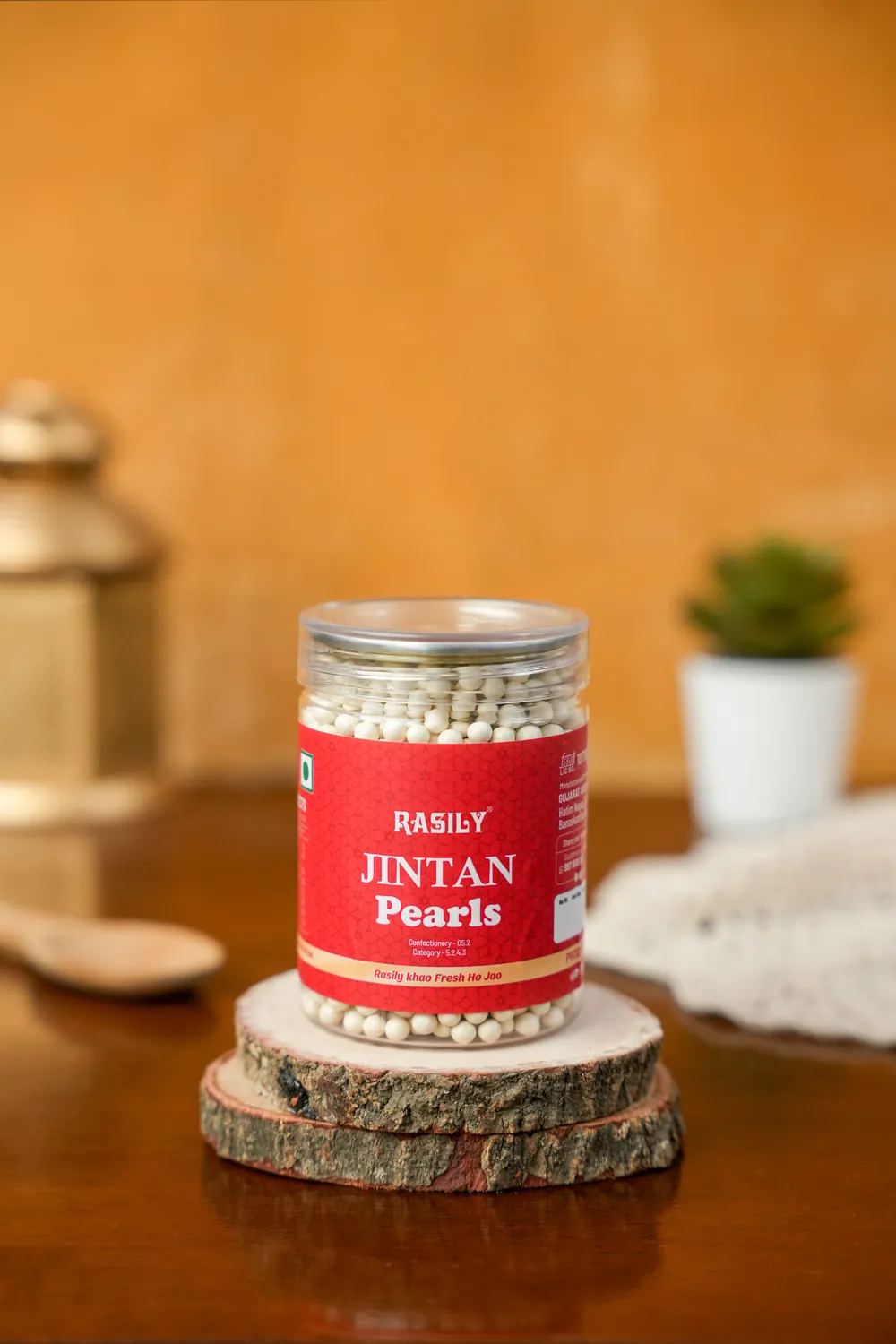
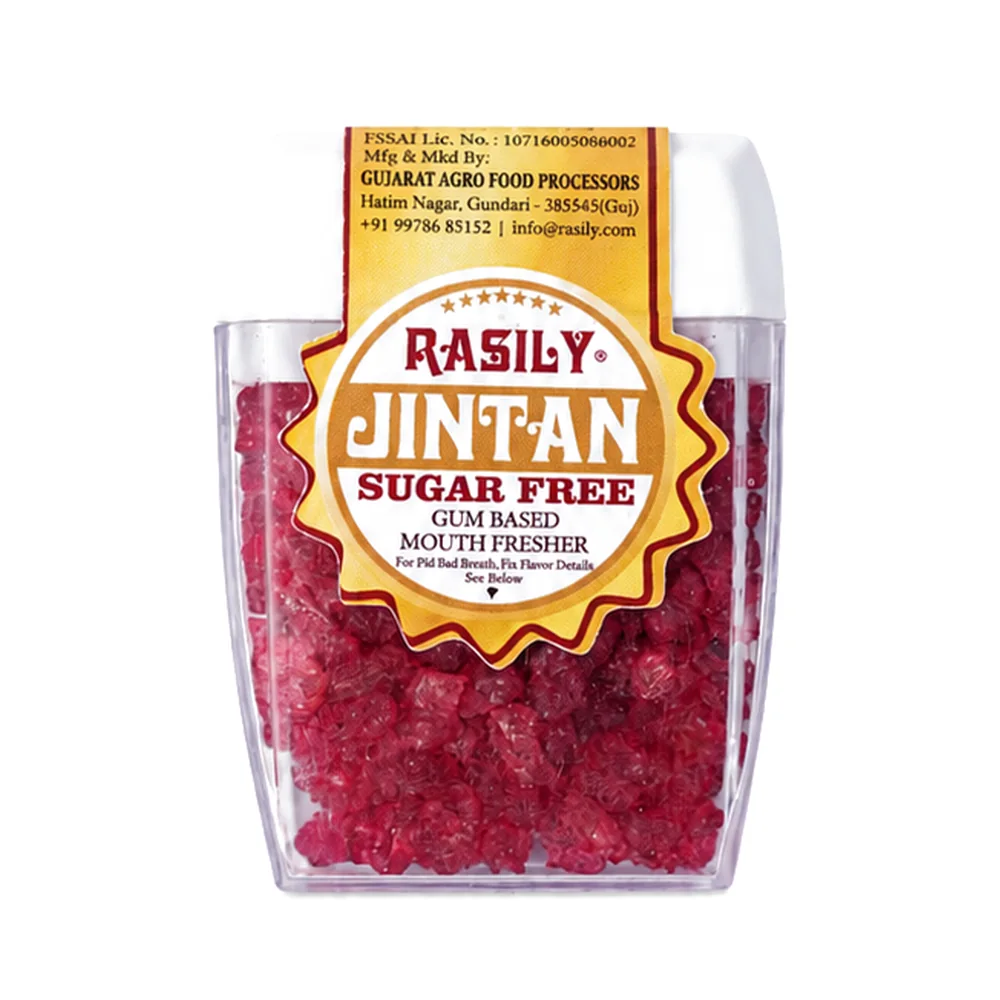
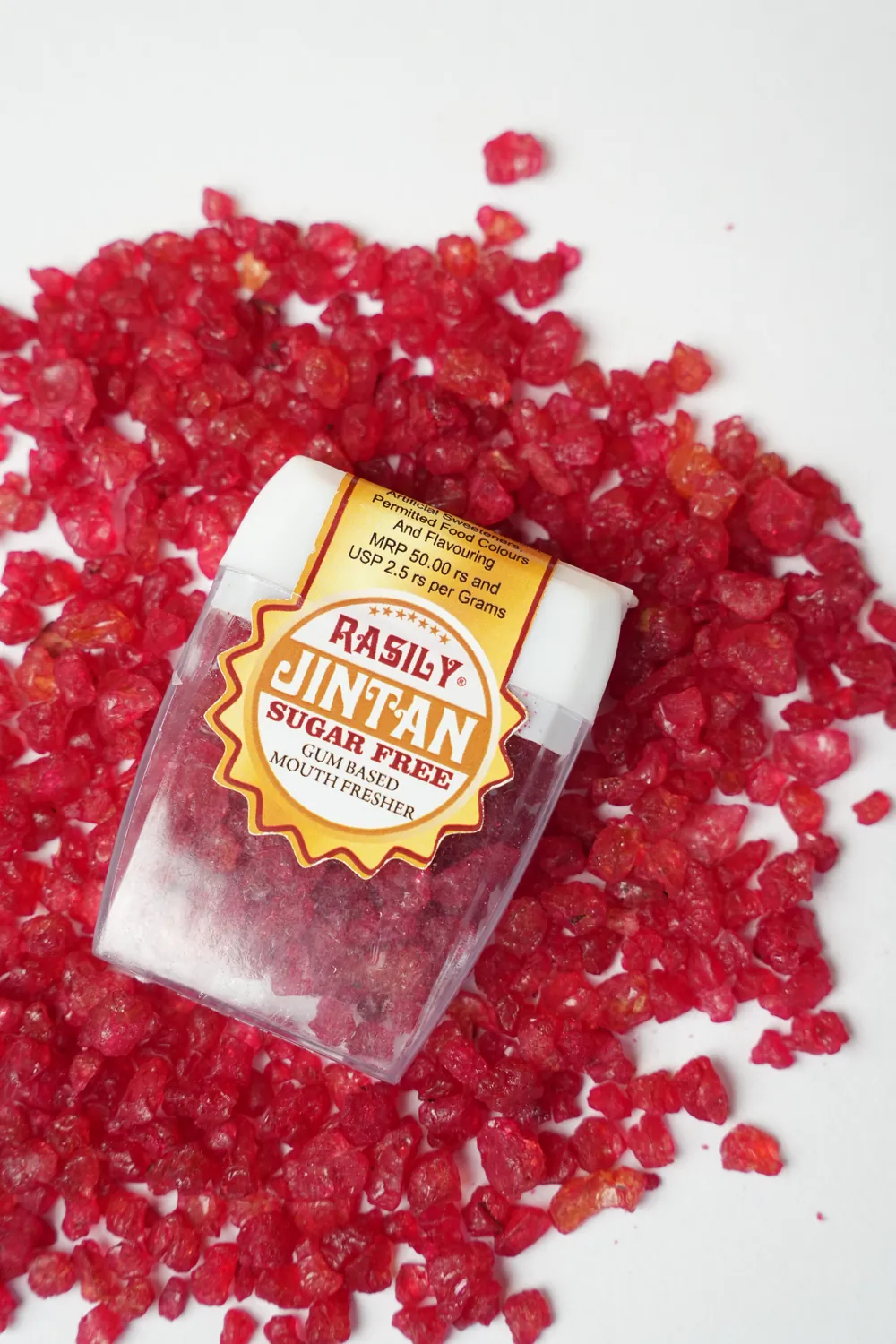
Tiny pearls with a cool menthol or pudina (mint) flavour, made for a quick, long-lasting fresh breath. They're perfect when you want freshness without chewing seeds. Jintan Sugar Free comes in a pocket-sized flip pack you can carry anywhere.
Why do Indians eat mukhwas after meals?
Ending a meal with a pinch of seeds is one of India's oldest food habits, and the reasons are part tradition, part taste:
- Fresh breath. Fennel, mint and rose leave a pleasant taste behind after garlic, onion and spices. That's the original job of mukhwas.
- A light finish to a heavy meal. Fennel, ajwain and other seeds have traditionally been chewed after meals in Indian homes. Many people find a spoonful of roasted mukhwas a comforting way to round off a rich lunch or dinner.
- A sweet ending without dessert. A little sweet mukhwas satisfies that after-dinner craving in a much smaller portion than a mithai.
- Hospitality. Offering mukhwas to guests, and at weddings and festivals, is a small gesture that says “thank you for coming”.
A gentle note: mukhwas is a traditional food habit, not a medicine. Sweet mixes contain sugar, so enjoy them in small portions. If you're watching your sugar, choose roasted digestive blends or Jintan Sugar Free.
How to eat mukhwas
- Take a small amount. Half a teaspoon to one teaspoon is plenty.
- Chew slowly. Let the flavours come out; mukhwas isn't meant to be swallowed in a hurry.
- Have it right after the meal. That's when it does its job of freshening and finishing the meal.
- Serve it to guests. A small bowl on the dining table, or a section of a masala box, is all you need.
Many families also keep a sachet in the office drawer or the car, and a jar near the dining table.
How to choose the right mukhwas
- You love sweet and colourful: Rangeela, Gulab, Bombay Mix or Tini Mini.
- You love paan: Majestic Pan (with real betel leaves), Pan Bahar or Mitha Pan.
- You want a savoury, less-sweet finish: Jamnagari, Salted, Flax Seed or Gujarati Gotli.
- You want quick fresh breath on the go: Jintan Pearls or Jintan Sugar Free.
- You can't decide (or you're gifting): a combo pack lets you try three or more flavours at a better price.
How to store mukhwas so it stays fresh
- Keep the jar tightly closed after every use. Air takes away the crunch and the aroma.
- Store it in a cool, dry place, away from direct sunlight and the heat of the stove.
- Always use a dry spoon. Even a drop of water can make the seeds soft or sticky.
- Refill your serving bowl in small amounts rather than leaving a big portion open for days.
A Gujarati tradition since 1973
Rasily's story began in 1973, when our founder, Mr. Hatim Bhai Shaikh Qamruddin Madarwala, set up a small-scale industry with a big love for traditional flavours. Today we make our mukhwas, supari and jintan in Hatim Nagar, Gundari, in Gujarat, from carefully chosen raw materials with natural ingredients and no preservatives. Our packs have a fresh new look, but the recipes are the same ones families have trusted for more than fifty years.
Rasily khao, fresh ho jao!
Frequently asked questions
Is mukhwas healthy?
Mukhwas is made mostly from seeds such as fennel, sesame and coriander, which have been part of Indian diets for centuries. Roasted, savoury mixes contain little or no sugar, while sweet mixes are sugar-coated, so it depends on the type. Think of it as a traditional after-meal treat and enjoy it in small amounts.
Can I eat mukhwas every day?
Yes, a small spoonful after meals is how most families enjoy it every day. If you have diabetes or are watching your sugar, prefer roasted digestive mixes or sugar-free options, and check with your doctor if you're unsure.
What is the difference between mukhwas and supari?
Mukhwas is a mix of seeds and spices. Supari is made from betel nut (areca nut). Rasily makes both: our Sweet & Soft Supari is a separate product with its own ingredients, while every mukhwas in our range is seed-based.
Is mukhwas good for kids?
Children usually love the colourful sweet mixes. Give small amounts, and avoid whole seeds for very young children, who can find them hard to chew.
Does mukhwas expire?
Yes. Like any food it has a best-before date, printed on the pack. Stored airtight in a cool, dry place, it keeps its crunch and aroma right up to that date.